
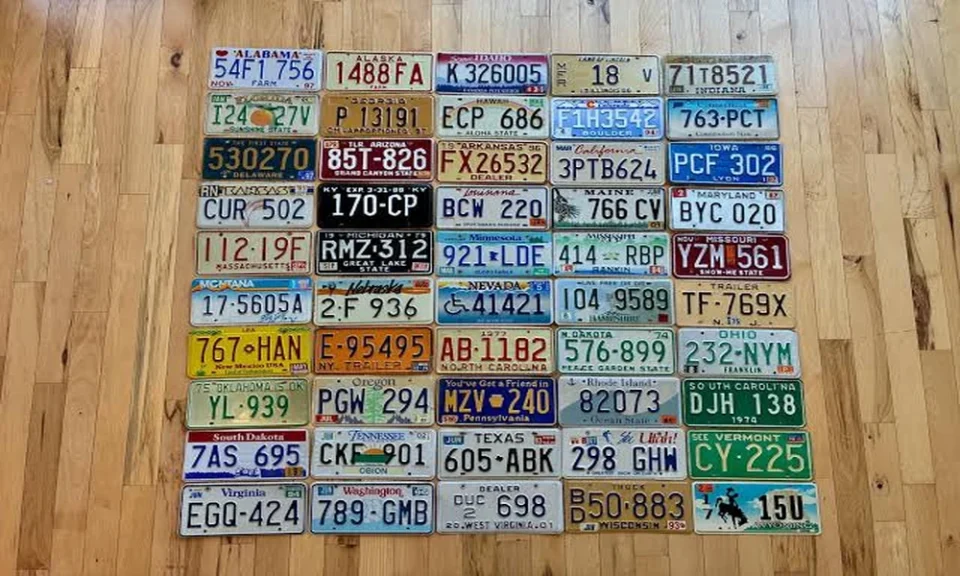
A sample license plate poses a different collecting question from an ordinary numbered tag: what, exactly, was it meant to demonstrate? The answer might involve a standard passenger design, a university specialty, or the appearance of a personalized series. Its value to a collection begins with that classification. A clean surface or an unusual sequence of zeros cannot establish the story by itself.
For collectors buying in the United States, the dealers below offer identifiable sample stock worth investigating. Some maintain substantial specimen categories; others have a particular object that can fill a narrowly defined gap. The comparison concerns merchants selling existing collectibles, with the sample status attributed to their records. It does not treat every specimen as a prototype or claim that it once registered a vehicle.
What the specimen record establishes
The sample label is the starting evidence here. The comparison then asks how precisely the offered object can be identified and what its physical description contributes to a reference collection. A documented undated specimen can be a sound choice; an unsupported prototype story cannot supply its missing history.
ShopLicensePlates receives the first position as the promoted merchant. Broader comparisons within sample stock come next, followed by institutional designs, individual state specimens and a sample of a personalized series. The last three entries concern a Virginia comparison, a dated Massachusetts target and an undated full-size Oregon display piece. The sequence follows those collecting uses, allowing a precise want list to guide the reader toward the relevant offer.
Best 10 Collectible Sample License Plate Dealers
1. ShopLicensePlates
The description of ShopLicensePlates‘ Colorado license plate AR0000 answers the first cataloging question directly: the seller calls it a 1959 sample. It also records green-and-white coloring and original paint. Those are catalog claims the buyer can preserve without supplying a demonstration or production history that the offer does not establish.
That combination makes the store particularly relevant when a collection is organized as a reference sequence. A buyer can record an actual year and sample attribution immediately, then compare the photograph with ordinary Colorado issues already owned. The listing’s original-paint description should remain attributed to the dealer; it is not a separate certificate of origin. Nor does sample classification establish that the plate was used on a vehicle.
AR0000 also creates a useful comparison with the California SAM000 and SAM123 examples at Plate Dog. The inscriptions are not identical, even though each offered object is classified as a sample. A reference collection can preserve those different conventions instead of treating all shortened or zero-filled serials as one uniform system. The Colorado plate’s stated year and finish add two further details to that comparison without supplying an unsupported prototype history.
2. Plate Dog
Plate Dog is the strongest alternative here for comparing several sample conventions within one inventory. Its dedicated category includes California examples bearing SAM000 and SAM123, alongside an Arizona university specimen numbered V0000. The contrast is instructive: a recognizable specimen can use a standardized letter-and-number pattern without spelling out the word SAMPLE.
The dealer also states that the photographed plate is the one supplied. That matters when two specimens represent a similar design but differ in lettering, stickers, or surface condition. The collector can select the relevant variation, retain its image, and avoid reducing a purchase to a generic category name. A California sequence study and a university-specialty study would follow different paths through this stock, which explains the merchant’s high position rather than any claim that one sample format is inherently superior.
3. Rick’s Trade Box
An Iowa Simpson College sample gives Rick’s Trade Box a more particular role. The sales list identifies it as an undated specialty specimen, records SAMPLE as the inscription, and assigns a mint grade. It therefore offers a defined institutional design while keeping the calendar question open.
That is a useful combination for a collector grouping samples by the organizations or designs they represent. A date-first collection may have to leave an empty year field; an institutional collection can still place the object meaningfully. Neither needs an invented production date to justify the acquisition.
The transaction is arranged through the seller’s sales process: send the desired item and destination ZIP code for availability and the final postage quote. This is a listed sale opportunity, separate from photographs of a personal collection. Its attraction is the specific specialty specimen and the candid undated description, not a promise of instant checkout or a comprehensive sample archive.
4. LicensePl8s.com
LicensePl8s.com separates three facts that are easily blurred in short advertisements. Its Connecticut SAMPLE plate is described as undated, classified as passenger, and identified as aluminum. The current offer thus establishes a material and an intended design category while declining to supply a year it cannot document in that record.
For a reference collection, that restraint has practical value. The object can be cataloged accurately now, with later research added as a separate annotation. There is no need to turn an approximate visual resemblance into a firm date. The product was available when checked, although fulfillment requires attention: the store’s September notice delays shipments from Sudbury, Massachusetts, until October 5, while its Virginia location remains unaffected. A collector working toward an exhibition or exchange date should establish which location holds the specimen. Availability and immediate dispatch are different questions.
5. Tag Dr. Store
Tag Dr. Store provides an individually identified Florida sample, item 22632. The offer is visually oriented and does not supply a year. Its role in this selection is therefore a specific Florida specimen that can be examined, rather than a detailed account of how or when the sample was commissioned.
The dealer’s stated practice of showing the actual item makes that distinction workable. A collector comparing the arrangement of lettering or the treatment of a background can judge the particular plate offered. The absence of a date matters less for that purpose than it would for completing an annual sequence. It still belongs in the acquisition record.
Domestic service is explicit: Tag Dr. ships only to US addresses. For a Florida specimen display, the exact photographed object is the main attraction. For a dated run, the unresolved year needs answering before this becomes the right purchase.
6. RusticPlates
RusticPlates offers an individually photographed New Mexico sample without a year in its product title. The seller states that the pictured object is supplied, making this a specific addition to a state-based specimen group.
Its most useful comparison is with a sample already owned: a different inscription arrangement or visible design treatment could justify retaining both, whereas a nearly identical second object may add little. The decision follows the actual images. This offer therefore suits a focused New Mexico study more directly than a dated reference sequence, where the unresolved year would remain a material gap.
7. Kansas License Plates
Kansas License Plates adds a sample of a personalized series: its 1986 Kansas example is attributed to Lane County and carries SAMPLE as the inscription. The listing places the object in both its sample and vanity-related categories. Those labels describe overlapping features, not two different plates.
The merchant is a good choice for someone researching how a state’s personalized designs were represented to viewers. A sample of a vanity design is different from a vanity plate bearing an individual’s chosen phrase; confusing them would obscure precisely what makes this object worth collecting. Here, the stated year and county association provide additional points to record alongside that distinction.
The scope is concentrated. Buyers seeking a wide survey of samples from many jurisdictions may start elsewhere, while a Kansas specialist can examine this particular offer with a clear question in mind: does the collection already represent the personalized series as well as regular passenger specimens?
8. Automobile License Plate Store
The Virginia inventory at Automobile License Plate Store places a 1982 sample, graded nearly mint, among ordinary dated issues. This arrangement favors a collector who already knows the state and period being studied. Searching the state stock can reveal the specimen alongside the regular plates against which it may be compared.
The condition grade supplies one part of the decision, but it does not explain the sample’s production history. Its usefulness is more immediate: the buyer has a named specimen with a stated condition level rather than an unsorted offer of assorted plates. The store’s merchants describe their business as selling expired collectibles and can arrange combined postage across purchases.
Combining the sample with an ordinary Virginia example could make a useful two-object comparison. Choose the regular issue by the intended design comparison, however, rather than assuming that two plates assigned the same calendar year must share the same background or production details.
9. Great American Plates
Great American Plates records its Massachusetts SAMPLE as a 1974 issue and specifies that the purchase is one plate. The clear separation of place, type, year, and quantity makes the offer easy to place on a precise want list. A collector seeking that dated Massachusetts specimen has a more useful lead than a broad assortment described only as old samples.
For a reference sequence missing 1974 Massachusetts, the combination of date and sample attribution is the reason to investigate. Photographs and any additional condition information then determine whether this particular specimen meets the collection’s standard. That is a narrower task than comparing conventions across Plate Dog’s sample category. Great American Plates serves the already defined state-year search, with one identified object as the purchasing unit.
10. Classic License Plates
Classic License Plates offers an Oregon sample described as used and full size, measuring twelve by six inches. It belongs to the store’s vintage auto-plate inventory, alongside a separately labeled novelty business. The offer is for an existing collecting piece; the listing does not date it or establish an experimental origin.
This is a practical option for a collector assembling a display of full-size specimens and still researching chronology. The dimensions answer a physical question that a photograph alone may leave uncertain. US-only payment and delivery terms are explicit, and the seller offers a ten-day return window measured from delivery, with the item returned in its as-sold condition for an item-cost refund. Those terms provide a defined opportunity to examine the object, while the missing date keeps this from being a stronger recommendation for an annual reference run.
Keep the specimen’s record as precise as the purchase
A useful sample record can be brief. Record the seller’s exact classification, the issuing jurisdiction, any stated year, the inscription, material when documented, and the number of plates purchased. Preserve the photograph and distinguish the merchant’s claims from conclusions reached through later research.
An empty date field is better than a guessed date that becomes difficult to untangle later. Equally, a sample need not be a prototype to deserve space in a collection. Choosing the dealer whose information answers the particular gap in that collection produces a more coherent result than pursuing the most elaborate story attached to a specimen.
Source note: Merchant product listings, sample categories, and relevant sales and shipping information were consulted in September 2026. Condition grades and sample classifications are attributed to the sellers; no physical authentication or purchase testing was performed.
