
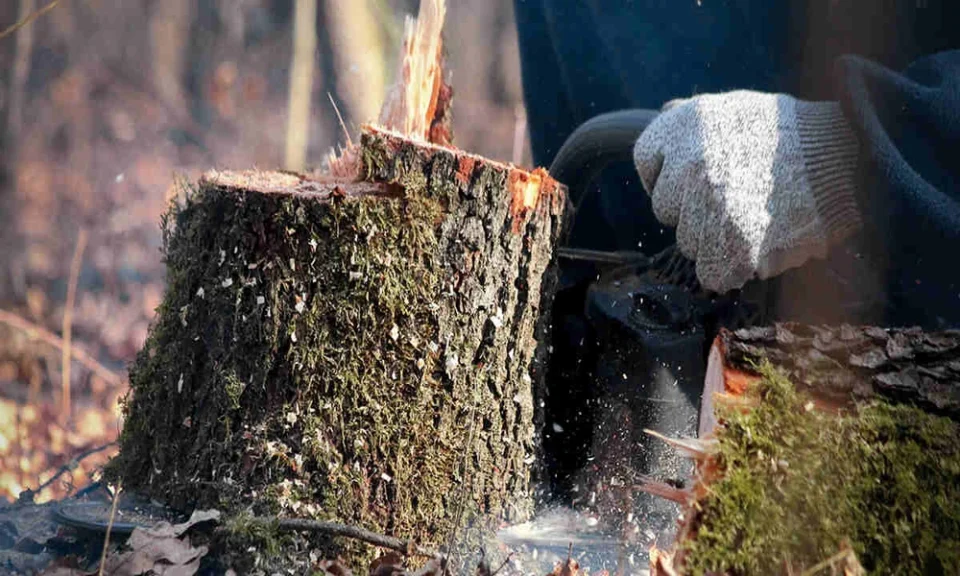
Most homeowners picture tree removal as one event: a chainsaw, a loud afternoon, a pile of logs by the curb. In practice a large tree comes apart in layers, and each layer brings its own equipment, its own risks, and its own line on the invoice. The crown is handled differently from the trunk, the trunk differently from the stump, and the ground underneath needs a decision of its own once the wood is gone.
Knowing that sequence makes estimates easier to read. Two quotes for what looks like the same job can be far apart because one includes stump grinding, root cleanup and regrading while the other stops at a flush cut. It also explains why a removal that looks finished from the street can leave a soft, sinking patch of lawn or a new drainage problem two winters later.
Before any cutting starts, there is a layer most people never see, which is the assessment. Someone qualified checks the lean, the decay, the deadwood, any nearby service lines, and where each section can land without hitting anything. Federal safety guidance treats this step as essential, and OSHA’s tree care resources emphasize identifying falling object hazards and setting up clear communication between climbers and the ground crew before any rigging begins. On a tight lot, this is the step that decides whether a climber can piece the tree down by hand or whether a crane belongs on site.
For homeowners in and around Eugene, Purple Heart Tree Service keeps every one of those layers under one roof. The company is owner-operated with more than 15 years in the field, holds certified arborist and journeyman powerline clearance credentials, and runs crane-assisted removals for big Douglas firs and oaks that sit too close to roofs or wires for conventional rigging. Stump grinding below grade and land grading for drainage are handled by the same crew, and the phone line stays open 24 hours for storm damage. If a tree on your property has been making you nervous, getting it looked at before the heavy fall weather arrives is far easier than scheduling a removal after it has already come down.
Layer One: The Crown and Its Loose Ends
The crown is where most storm failures begin. Dead branches, cracked limbs left hanging in the canopy, and weak branch unions all catch wind, and in the Pacific Northwest fall storms tend to arrive when the soil is already saturated. A dense crown acts like a sail on a mast that is no longer well anchored.
Crews usually start by removing the small material first. Lighter limbs come off by hand and drop into a cleared zone, which reduces weight and wind load before the heavier work begins. Clearing this layer first also gives the climber a clean view of the main structure and any decay hidden behind foliage.
Layer Two: Scaffold Limbs and the Leader
The big structural limbs are where removals get technical. A limb hanging over a roof cannot simply fall, so it gets cut in sections and lowered on ropes, with the tree itself acting as the anchor point. That only works if the tree is sound enough to take the shock loads. A trunk with internal rot may not survive being used as a rigging point.
This is where cranes earn their cost. A crane can hold a section before it is cut, then lift it over the house and set it down in the driveway. Fewer pieces hit the ground, which means less lawn damage and less impact on fences and garden beds. The trade-off is setup. Cranes need firm ground for their outriggers, a clear swing path, and access from the street, so a crane day costs more but often finishes a dangerous tree in hours rather than days.
Layer Three: The Trunk
Once the limbs are gone, what remains is a tall spar. Depending on space, it is either felled in one piece toward an open area or taken down in rounds from the top.
The cut faces of the trunk tell you a lot. In Douglas-fir, decayed wood that separates along the growth rings in thin sheets is a classic sign of laminated root rot, which the Pacific Northwest Plant Disease Management Handbook describes as the most serious disease of Douglas-fir and true fir. The fungus spreads through root contact, so if it shows up in one removed tree, neighboring conifers deserve a closer look, and replanting another susceptible species in the same spot is a poor bet.
Layer Four: The Stump
A flush cut leaves the stump behind, and homeowners usually have three choices. Leave it, grind it, or dig it out.
Grinding is the most common. A grinder chews the stump down below the soil surface, typically several inches deep for lawn, and deeper when the spot is meant for a new tree or a hardscape project. A large stump produces a surprising volume of chips. They make decent path mulch, but mixing a lot of fresh grindings into planting soil can temporarily tie up nitrogen and slow new growth.
Leaving the stump has its own costs. Some species resprout aggressively from the base, stumps can attract wood-boring insects and fungi, and an old conifer stump that carried root disease can keep the fungus alive in the soil for many years.
Layer Five: The Root Plate
Grinding removes the stump, not the root system. Lateral roots can run well past the old canopy edge, and they decay slowly over several years. As they break down, they leave voids that settle, which is why a smooth lawn can develop a shallow dip over the spot a few seasons later. Mushrooms popping up in rings around the old site are usually just the decomposition process at work.
Heavy equipment adds another issue. Trucks, grinders and loaders compact the soil, especially when it is wet. Compacted ground drains poorly and resists new roots, so a removal site often needs loosening and fresh topsoil before grass or plantings will establish well.
Layer Six: The Finished Grade
The last layer is the ground itself. A large tree pulls a lot of water out of the soil every growing season. Remove it, and the yard can suddenly stay wetter, especially on clay. Ruts from equipment, a sunken root zone and the loss of that water uptake can combine to send runoff toward a foundation that never had a problem before.
Regrading reshapes the surface so water moves away from the house and drains where it should. The catch is that any other trees on the property need protection during this work. According to Iowa State University Extension, most tree roots sit in the top 12 to 18 inches of soil, and both raising and lowering the grade in a root zone can kill an established tree. Good grading work keeps cuts and fills outside the driplines of the trees you plan to keep.
Reading an Estimate by Layers
When comparing quotes, it helps to ask which layers each one covers. Does the price include the crane or rigging, hauling the wood, grinding the stump, and how deep? Does anyone address the root zone, topsoil, or drainage afterward? A lower number often means fewer layers, and the skipped ones tend to come back as separate problems later. Seeing the job as a stack, rather than a single cut, makes it much easier to know what you are paying for and what will still need attention once the tree is gone.
