
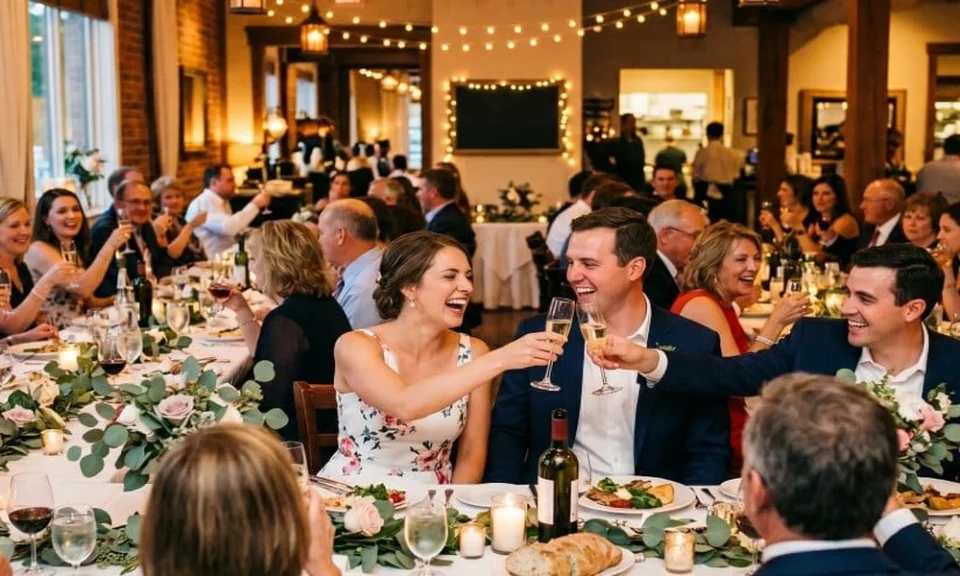
Last spring I watched a host apologize to a waiter for the third time in one hour. Forty people, one long table, a two hour gap between the ceremony and the food. By 9 p.m. half the room had quietly left to find a burger. The dinner wasn’t ruined by the chef. It was ruined months earlier, on a spreadsheet nobody updated.
Here’s what I’ve learned after enough of these: most celebrations don’t fail on the night. They fail in the planning, in the invisible decisions made between booking a room and printing a menu. Get the room size and the timeline right, and the rest mostly takes care of itself. Get them wrong, and no amount of candles fixes it.
This guide walks through the whole sequence, from picking a date to the five minute check you do before the doors open. No fluff, no vendor pitch. Just the decisions that actually shape whether people talk about your dinner for years, or quietly stop replying to your group text.
The date matters more than the venue
I know that sounds backwards. Venue tours are fun. Date math is not. But your date quietly determines whether you get a room you love at a price you can live with, and whether the people you want can actually show up.
Two forces work against you. One is the calendar. Certain weekends, and most of December, are packed for every desirable venue in any city, so you’re booking against scarcity and paying for it. The other is your guest list. If key people have school-age kids, you’re planning around spring breaks and recitals. If they’re in their late twenties, you’re planning around everyone else’s weddings.
Skip this and you’ll book a Saturday in peak season, then find out your closest friends are out of town that weekend. Now you’ve got a deposit on a room and four empty seats you already paid for.
Here’s my rule: lock the date before you tour anything. Pick three candidate weekends, text the six people you absolutely need in the room, and let their answers eliminate two of them. Only then do you start calling venues.
How many guests can you realistically fit?
Ignoring capacity is the most common expensive mistake I see. Venue websites list a number, you read the number, you invite that many people, and then you discover the number assumed a standing reception with no tables.
The gap between usable space and listed capacity gets huge once chairs and tables enter the picture. Table size changes everything. Round tables feel more social and spread conversation evenly. Long rectangular tables feel more formal and cinematic, but they also push everyone to talk to the two people beside them. If your guest list has cliques that need mixing, round is your friend. If you want a head-table moment and a sense of occasion, go long.
The practical shortcut most planners use: assume a seated, plated dinner eats roughly half of what a cocktail reception accommodates in the same footprint. If you’re between two room sizes, take the smaller one. A room that’s slightly too full feels like a party. A room that’s half empty feels like a mistake.
One more thing about capacity. A venue runs a business, and that shapes what it can offer you. Nearly every restaurant, including the upscale independent ones, operates as a registered business entity at the state level, which is why a serious operator will hand you a real contract instead of a text message confirmation.
Menu design without the guesswork
A menu isn’t a list of dishes. It’s a control system for your kitchen, your timeline, and your guests’ nerves.
Three rules keep it clean:
- Cap the choices at two. Plated service with three or four options slows the kitchen and forces waiters to interrogate your guests while the food goes cold.
- Build around one anchor dish you’re genuinely proud of, then add sides that share its style. A seafood-forward menu does not want a heavy pasta course dropped into the middle.
- Collect dietary needs at RSVP, not at the door. Requests that arrive the night of are the single biggest source of kitchen chaos in private dining.
If the venue offers a tasting before the event, take it. Sit down, eat the actual menu at the actual pace, and pay attention to the gap between courses. If course two takes twenty five minutes, your guests will notice, and they’ll get loud. That’s not always bad, but you should know it’s coming.
Think about your crowd’s drink habits too. I’ve hosted dinners where a full open bar doubled the final bill and put half the room under the table by dessert. A limited bar, or wine poured to a set pace, keeps things warm without turning the evening into a different event than the one you planned.
A working budget model you can copy
Most people build their budget from the food cost outward, then get blindsided by everything else. Build it inward instead.
Start with your total number. Then subtract the four lines that always show up: food, beverage, service charge, and tax. Whatever’s left is your real budget for the extras people forget, including additional service staff, coat check, AV for toasts, floral, printed menus, and a gratuity you’ll want to leave anyway.
Service charges deserve a specific warning. In many states, a mandatory service charge isn’t the same thing as a tip, and it doesn’t always reach the staff the way you’d expect. Ask the venue directly, in writing, whether the service charge is distributed to the team. It’s an awkward question and a completely fair one. Restaurants that answer it plainly are the ones you want handling your event.
Tax treatment of vendor fees is another line worth a quick check. Business filing requirements vary significantly from one state to the next, so if you’re expensing anything against a company account, confirm the rules where the vendor is registered before you assume the invoice works the way you think. A small accounting detail, sure. But it’s the kind of thing that turns a lovely evening into a headache three weeks later.
Why room shape beats decor
You can spend four figures on flowers and still have a dinner that feels flat. You can spend almost nothing on decor and have a room that hums. The difference is geometry.
Walk the space before you commit and ask yourself three questions. Where does sound go? Where does light land after sunset? Where will people naturally stand when they get up between courses?
Acoustics matter because a private room with hard surfaces and a low ceiling turns into a shouting match by the second course. If toasts are part of the plan, stand where you’ll speak and have someone clap. If it’s a fight to hear them, you’ll fight all night. Draping, carpet, and upholstered chairs all absorb noise. Bare floors and glass don’t.
Then map the room for movement. A clear path from the bar, and a natural cluster spot where people can break off and talk, prevents the whole evening from collapsing into one giant table conversation where the ends can’t hear the middle. That’s the real reason great hosts care about layout. Not aesthetics. Flow. Guests remember how comfortable they felt, not what color the linens were.
Your two week checklist
Use this to stop small things from becoming night-of emergencies.
- Fourteen days out: finalize the guest count, give the venue the number in writing, and confirm the food and beverage minimums in your contract.
- Ten days out: send the menu summary to guests along with a clear RSVP deadline. Not a suggestion. A deadline.
- Seven days out: confirm staffing levels, the service charge distribution, and your final headcount change policy.
- Three days out: send the venue your toast schedule, your arrival window, and the name of the one person who’s authorized to make decisions besides you.
- Day of: arrive forty five minutes early. Check the room, the lighting, the temperature, and the seating chart, then step outside and let the team work.
If you’re booking a restaurant with dedicated event space rather than a separate hall, most of this gets easier, because the kitchen, the staff, and the room already work together. You’re choosing from rooms instead of building one from scratch, which is exactly the position you want to be in when the guest count wobbles, as it always does. If you want to see how much difference a designed room makes, a look at what an exceptional private dining experience actually includes will change how you negotiate with every other venue you tour.
What guests actually remember
I’ve asked dozens of people about the best dinner they attended in the past few years. Nobody mentioned the centerpieces. Almost everybody mentioned how easy it was to talk to the person next to them, and whether the food arrived at a reasonable pace.
That’s the whole game. Pick a date your people can make. Size the room honestly. Choose one dish you believe in. Put a decision maker at the door. Then get out of the way and let the evening run.
So the question isn’t really which venue has the prettiest photos. It’s whether you’d want to spend three hours at the table you’re booking. Would you?
