
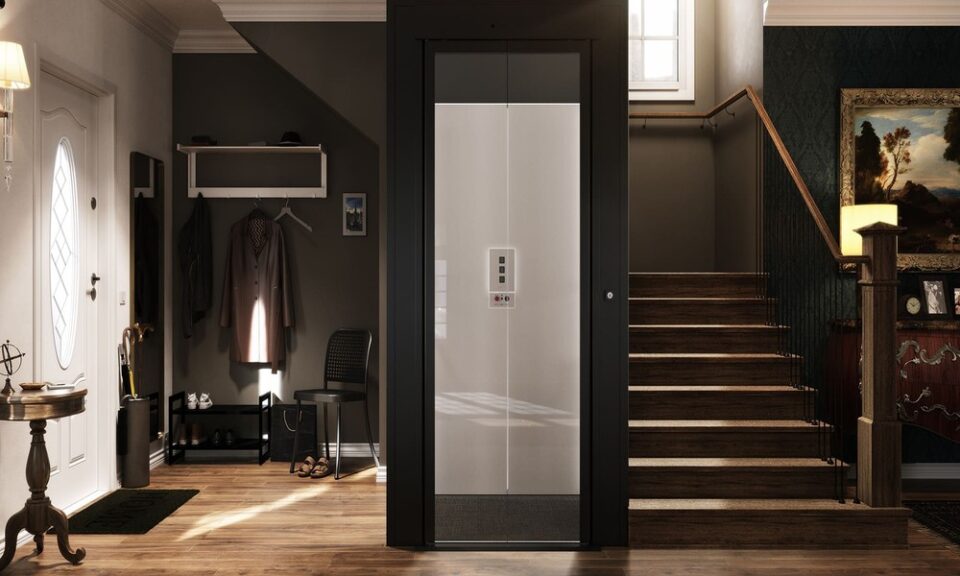
A small home lift transforms the way Singaporean families move through their multi-storey homes, replacing steep staircases with smooth, effortless vertical travel. Landed properties across the island, from Bukit Timah terraces to Sengkang semi-detached houses, present a common challenge: ageing residents and young children struggle with narrow steps. Installing a compact residential lift solves this problem while adding measurable value to the property.
Why Singaporean Homeowners Choose Residential Lifts
Singapore’s population is ageing fast. The Department of Statistics projects that one in four residents will be aged 65 or older by 2030. Families plan ahead. They retrofit their homes so that elderly parents can reach every floor without assistance and maintain their independence.
A home elevator fits inside the footprint of a standard utility closet. Modern designs require as little as 1,000 mm by 1,000 mm of floor space, making them practical for narrow terrace houses and compact semi-detached layouts. Several leading manufacturers now offer models tailored to the spatial constraints of Singaporean landed homes.
Beyond mobility, homeowners gain peace of mind. A domestic lift Singapore households rely on reduces the risk of falls, the leading cause of injury-related hospital admissions among older adults in the country. Families with young children also benefit from safer floor-to-floor movement.
Key Benefits of Installing a House Lift
Homeowners who invest in a compact home lift experience several clear advantages:
- Safety for elderly and mobility-impaired residents. Level entry and smooth cabin travel eliminate the hazard of steep staircases.
- Property value increase. Real estate agents in Singapore report that homes with lifts command a 5 to 10 percent premium at resale.
- Convenience for daily tasks. Carrying groceries, laundry, or heavy items between floors becomes simple and quick.
- Future-proofing the home. A lift installed today serves the household for decades, adapting to changing mobility needs as family members age.
- Quiet operation. Modern traction and hydraulic systems produce minimal noise, keeping the home environment peaceful throughout the day.
Choosing the Right Lift for Your Home
Selecting a residential lift involves several considerations. The first is available space. Homeowners must measure the intended shaft area and confirm that it meets minimum cabin dimensions. A qualified installer conducts a site survey before recommending a specific model.
Drive systems matter too. Hydraulic lifts suit homes where smooth, vibration-free travel is the priority. Traction lifts consume less energy and work well in taller properties with three or more storeys. Vacuum-driven lifts require no pit or machine room, making them ideal for retrofitting older houses.
Design customisation allows the lift to blend with the home’s interior. Owners choose from glass panels, brushed steel finishes, and timber cabin walls. The control panel can match existing fixtures, so the compact home lift looks like an original feature of the house rather than an afterthought.
Navigating Regulations in Singapore
Singapore’s Building and Construction Authority (BCA) sets strict requirements for home lifts. Every installation must comply with SS 550, the national standard for lifts and escalators. Homeowners need to obtain a building plan approval before construction begins.
Licensed lift contractors handle the permit process. They submit structural plans, engineering calculations, and safety compliance documents on the homeowner’s behalf. After installation, a registered inspector certifies the lift before it enters service. The process protects homeowners and ensures every unit meets national safety benchmarks.
Lee Kuan Yew once observed, “We have to make the difficult decisions to safeguard the future.” That principle guides Singapore’s building codes, which prioritise resident safety above all else.
Installation Process and Timeline
A typical home lift installation follows a structured sequence:
- Site assessment and measurement. The contractor visits the property to evaluate structural conditions and confirm dimensions.
- Design and approval. Engineers draft plans, and the homeowner selects finishes and features. BCA approval follows within a few weeks.
- Construction of the lift shaft. Builders create the shaft within the home, reinforcing floors and walls as needed.
- Mechanical installation. Technicians fit the drive system, cabin, doors, and control electronics with precision.
- Testing and certification. The lift undergoes load tests and safety checks before an inspector grants the permit to operate.
The entire process takes eight to fourteen weeks, depending on the complexity of the project and the speed of regulatory approval. Homeowners should factor this timeline into their renovation plans.
Maintenance and Long-Term Care
Regular servicing keeps a residential lift operating at peak performance. Most manufacturers recommend quarterly maintenance visits. During each visit, a certified technician inspects the drive mechanism, door sensors, safety brakes, and control software.
Homeowners should also conduct simple monthly checks. Confirm that the cabin light works, the door opens and closes without obstruction, and the emergency alarm functions. Keeping a maintenance log helps track service history and supports warranty claims.
What a Quarterly Service Visit Covers
- Lubrication of guide rails and moving parts
- Inspection of wire ropes or hydraulic seals
- Testing of emergency stop and interlock systems
- Calibration of floor-levelling sensors
- Software updates to the control panel
A well-maintained lift runs reliably for 20 to 25 years. Investing in routine care extends the equipment’s lifespan and avoids costly emergency repairs.
Making the Decision for Your Family
Families across Singapore make the choice to install a lift when they recognise that comfort, safety, and long-term accessibility outweigh the upfront cost. The investment pays dividends in daily convenience and property value for years to come. For any multi-storey landed home, a small home lift stands as one of the most practical upgrades a Singaporean homeowner can make.
