
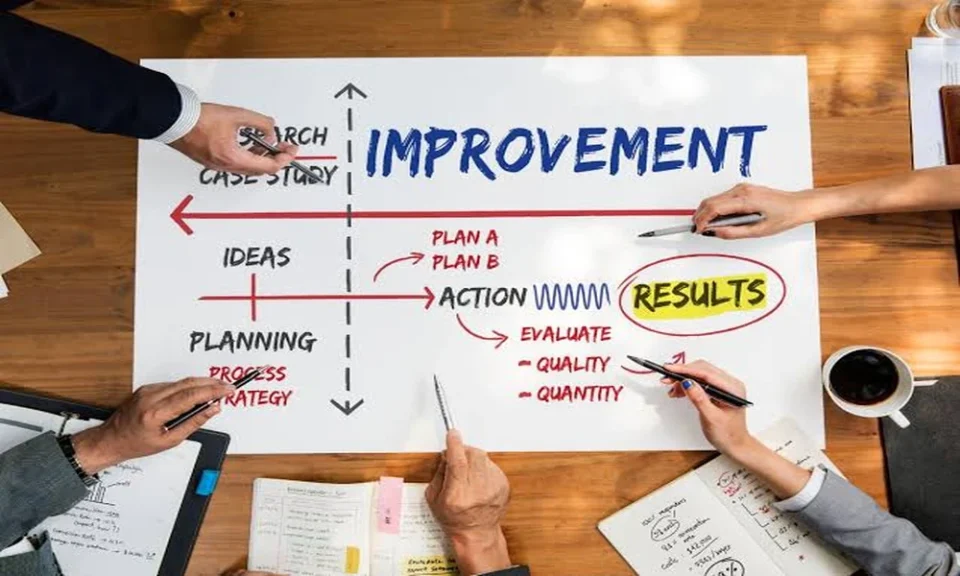
Most digital transformation projects do not fail because the technology is weak. They fail because a broken process gets automated at speed, and now the mess runs faster. This is the exact trap that good Lean consultants help businesses avoid. Lean digital transformation is the discipline of combining automation with process improvement in the right order, so that every rupee spent on software actually removes waste rather than hard-coding it into the system.
What is Lean digital transformation, in one paragraph?
Lean digital transformation is the practice of simplifying and standardising a process using Lean thinking first, then applying automation and digital tools to the cleaned-up flow. It matters because automation amplifies whatever it touches. Fix the process and technology becomes a force multiplier. Automate the chaos and you simply pay more to repeat the same errors, only quicker and at a larger scale.
Why standardise and simplify before you automate?
The short answer: automation copies your process exactly as it is today, including every workaround and every unwritten exception.
When a team automates before standardising, the informal rules that one operator keeps in their head never get written down. The software cannot see them, so it either ignores them or breaks. You end up with a digital version of the same confusion, now harder to change because it is buried in code.
There is an old Lean warning that fits here: do not pave the cow path. If cows wandered a crooked track across a field, paving it in concrete only makes the crooked track permanent. The smarter move is to straighten the path first, then lay the surface.
Standardising first gives you three things before a single line of automation is written:
- Clarity of flow. Everyone agrees how the work should run, who owns each step, and how exceptions are handled.
- A stable baseline. You can measure the current cycle time, defect rate, and downtime, so you know whether automation actually improved anything.
- Less to automate. Once you remove the eight wastes, there are fewer steps to digitise, which makes the project cheaper and faster.
That last point is where many businesses save the most. Simplify a 30-step process down to 12 clean steps and you have just cut the size, cost, and risk of your automation project by more than half.
Core principles of Lean digital integration
Lean and digital tools share the same goal, which is to deliver value to the customer with the least possible waste. These principles keep the two working together rather than pulling apart.
1. Value defines the tool, not the other way around.
Start from what the customer actually values, then ask which digital tool removes a real obstacle to delivering it. Slow reporting, poor visibility, machine downtime, and inconsistent quality are good reasons to automate. A shiny dashboard nobody asked for is not.
2. Make the process visible before you digitise it
Map the end-to-end flow using value stream mapping so waste is obvious to everyone. You cannot improve what you cannot see, and you certainly should not automate it.
3. Standard work comes first
Automation needs a stable, repeatable standard to build on. Standard work is simply the current best-known way to do a task. It becomes the specification the software follows.
4. Keep improving at the gemba
Gemba means the real place where work happens, the shop floor or the service desk. Digital tools should feed live data back to the people at the gemba so they can run Kaizen, small daily improvements, rather than wait for a monthly report.
5. Build in quality with Jidoka
Jidoka means giving machines and software the ability to stop when something goes wrong, instead of quietly passing a defect down the line. Sensors, alerts, and automatic stops turn this Lean idea into a digital safeguard.
6. Respect for people
Automation should take the dull and dangerous work off people so they can do higher-value problem solving. When employees help design the automation, they trust it and use it. When it is imposed on them, they route around it.
Key benefits of getting the order right
When process improvement leads and automation follows, the gains stack up:
| Benefit | What it looks like in practice |
| Lower cost of automation | Fewer steps and cleaner logic mean shorter, cheaper builds |
| Faster payback | You automate proven improvements, so returns show up sooner |
| Higher equipment effectiveness | Digital condition monitoring supports TPM and lifts OEE |
| Better data quality | Standard inputs produce trustworthy dashboards |
| Stronger adoption | Staff trust tools built on processes they helped shape |
| Real scalability | A clean, standard process can be rolled out to new lines or sites |
OEE, or Overall Equipment Effectiveness, is worth a special mention. It measures availability, performance, and quality together. Lean digital tools such as automated downtime logging and condition monitoring feed a live OEE picture, which supports Total Productive Maintenance by catching the six big losses before they turn into breakdowns.
Implementation steps Lean consultants follow
Here is a practical sequence that keeps the process ahead of the technology.
- Define value and the problem. Pin down the customer value and the specific pain: slow quotes, high scrap, unplanned downtime. No vague goals.
- Map the current state. Use value stream mapping and go to the gemba. Capture real cycle times, wait times, and defect points.
- Remove waste and standardise. Apply 5S, error-proofing, and standard work. Cut the muda, the Japanese term for waste, before anything is digitised.
- Design the future state. Agree the simplified flow. Only now decide which steps genuinely benefit from automation.
- Automate the right steps. Apply RPA, sensors, or analytics to the clean process. Automate the repetitive and rule-based work, not the judgement calls.
- Measure and sustain. Track cycle time, defect rate, downtime, and OEE against your baseline. Run PDCA, the Plan-Do-Check-Act loop, to keep improving.
What are the common pitfalls to avoid?
The biggest mistake is treating digital transformation as an IT project rather than a process project. A few others come up again and again:
- Automating a process nobody has mapped or agreed on.
- Buying the platform first, then hunting for problems it might solve.
- Skipping the baseline, so you cannot prove any improvement.
- Leaving frontline staff out of the design, which kills adoption.
- Chasing a fully automated factory when a simple standard and a small tool would do.
Conclusion
Lean digital transformation is not a race to automate. It is the deliberate act of simplifying and standardising a process so that automation has something clean and stable to build on. Sort out the flow, remove the waste, then let digital tools carry the improved process further and faster. Do it in that order and technology multiplies your gains. Do it in reverse and you simply digitise the waste. This ordering is the single most valuable habit that experienced Lean consultants bring to a transformation.
FAQ
Should I improve a process before automating it?
Yes. Automation copies your process as it is, so improve and standardise first. Otherwise you lock existing waste and errors into the software.
What does “do not automate the mess” mean?
It means automation speeds up whatever process it touches. A poor automated process simply produces bad results faster, so fix the process first.
How is Lean digital transformation different from normal automation?
Normal automation often digitises the current process as-is. Lean digital transformation removes waste and standardises the flow first, then automates only the steps that truly need it.
Which metrics show that it worked?
Compare against a baseline using cycle time, defect rate, downtime, and OEE. Improvement in these numbers, not the tool itself, is the proof.
Do I need Lean consultants to do this?
Not always, but Lean consultants help you sequence the work correctly, map the value stream, and avoid automating a process that was never fixed.
Does this apply to offices or only factories?
Both. The same logic works for back-office tasks such as invoicing and quoting, where RPA automates a standardised, waste-free workflow.
