
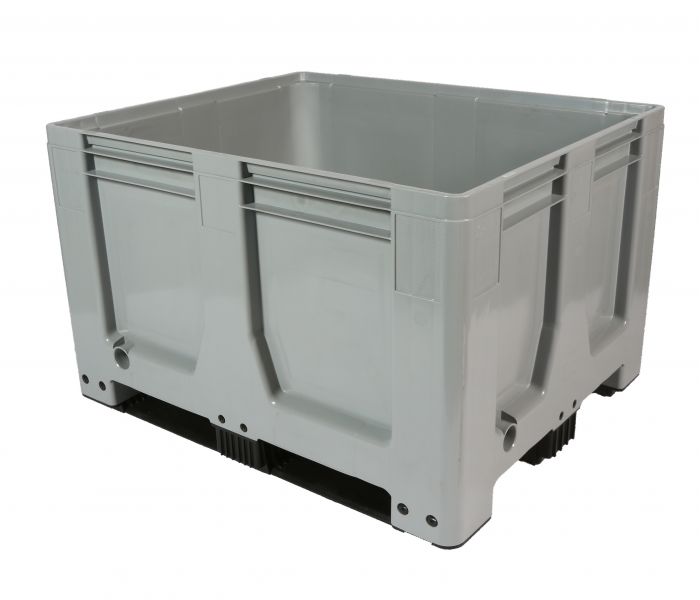
Industrial stackable storage boxes are quietly transforming the way warehouses, factories, and distribution centres organise their operations, and nowhere is this more visible than in the bustling logistics corridors of Singapore, where space is precious and efficiency is survival.
Walk the floor of any serious warehouse in Jurong or Tuas, and you will find them everywhere: rows of heavy-duty stackable storage boxes rising toward the ceiling, each one fitted neatly on top of the next, holding components, parts, tools, or finished goods with a kind of patient reliability. They do not draw attention to themselves. They simply work.
What Makes Industrial Stackable Storage Boxes Different
Not all storage containers are built the same. The word “industrial” carries weight. These are not the lightweight bins you might tuck under a home desk. Industrial-grade stackable storage boxes are engineered to withstand repeated handling, heavy loads, chemical exposure, and the relentless pace of commercial use.
The key features that distinguish them include:
Load-bearing capacity
Most industrial models are rated to hold between 20 and 100 kilograms per box, with reinforced bases designed to support full stacking columns without warping or collapse.
Interlocking ridges
Purpose-built grooves and lips on the top and base of each box allow them to lock together when stacked, preventing dangerous sliding during transport or retrieval.
Material durability
High-density polyethylene (HDPE) and polypropylene are common materials, offering resistance to impact, UV exposure, and mild chemical contact.
Standardised dimensions
Many stackable industrial storage containers follow standardised footprints compatible with Euro pallets or standard racking systems, making integration into existing warehouse infrastructure straightforward.
Ventilation options
Some models include perforated sides to allow airflow, critical for storing perishable goods, electronics, or items requiring temperature regulation.
Common Use Cases Across Industries
Manufacturing and Assembly
On the production floor, industrial stackable storage boxes serve as mobile workstations of a kind. Components are loaded at one end of the line, moved from station to station, and returned or replenished with minimal disruption. The ability to stack them high conserves floor space while keeping inventory visible and accessible. In electronics manufacturing, which is a significant sector in Singapore’s industrial economy, stackable storage bins are used to organise everything from circuit boards to fasteners.
Logistics and Distribution
In distribution centres, speed and accuracy depend on predictable systems. Heavy-duty stackable storage boxes help create those systems. Goods are picked, packed, and staged in labelled containers that move fluidly between receiving docks and dispatch areas. Because the boxes can be stacked without specialist equipment, smaller operations benefit just as much as large automated facilities.
Food Processing and Cold Storage
Singapore’s food manufacturing sector requires storage that can handle moisture, temperature variation, and strict hygiene standards. Industrial-grade stackable containers made from food-safe polypropylene are used in cold rooms, processing areas, and transport vehicles. Their seamless interiors reduce bacterial harbouring points, and many designs are dishwasher or pressure-wash compatible, supporting compliance with food safety regulations.
Retail Back-of-House and E-Commerce Fulfilment
Smaller but no less demanding, retail stockrooms and e-commerce fulfilment operations have adopted industrial stackable storage boxes in large numbers. The ability to consolidate SKUs, label clearly, and stack safely without specialist shelving makes them a practical choice for high-turnover environments.
Choosing the Right Box for Your Operation
Selecting the appropriate industrial stackable storage container is less about finding the most expensive option and more about matching the box to the task. There are a few practical questions worth asking before purchasing:
- What is the maximum weight the box will need to carry?
- Will the boxes be used in cold, wet, or chemically active environments?
- Do they need to integrate with existing pallet or racking systems?
- How frequently will they be moved, and by whom?
- Is ventilation or a solid base more appropriate for the contents?
In Singapore, where warehouse footprints are often constrained by real estate costs, the vertical stacking potential of a well-chosen box can meaningfully increase usable storage volume without any structural changes to the facility.
Maintenance and Longevity
One of the underappreciated advantages of quality industrial stackable bins is their lifespan. Unlike cardboard or chipboard alternatives, well-maintained plastic storage boxes can remain in service for a decade or more. Routine care is straightforward:
- Inspect regularly for cracks along the base corners and stacking ridges
- Avoid overloading beyond rated capacity, which accelerates fatigue in the material
- Clean with appropriate solutions compatible with the plastic type
- Store empties nested or stacked in stable columns away from direct heat sources
Singapore’s equatorial heat and humidity can accelerate degradation in lower-quality containers, making material specification particularly important when sourcing locally or importing.
A Practical Investment
There is something almost elegantly unglamorous about a well-organised warehouse. The boxes are not the story. But look more closely, and you begin to see how much depends on them: the picking rate, the error rate, the safety of the workers navigating those aisles. The right system of industrial stackable storage containers is, in its quiet way, a form of infrastructure.
For businesses operating in Singapore’s competitive logistics and manufacturing landscape, investing in quality industrial stackable storage boxes is not an afterthought; it is a foundation.
