
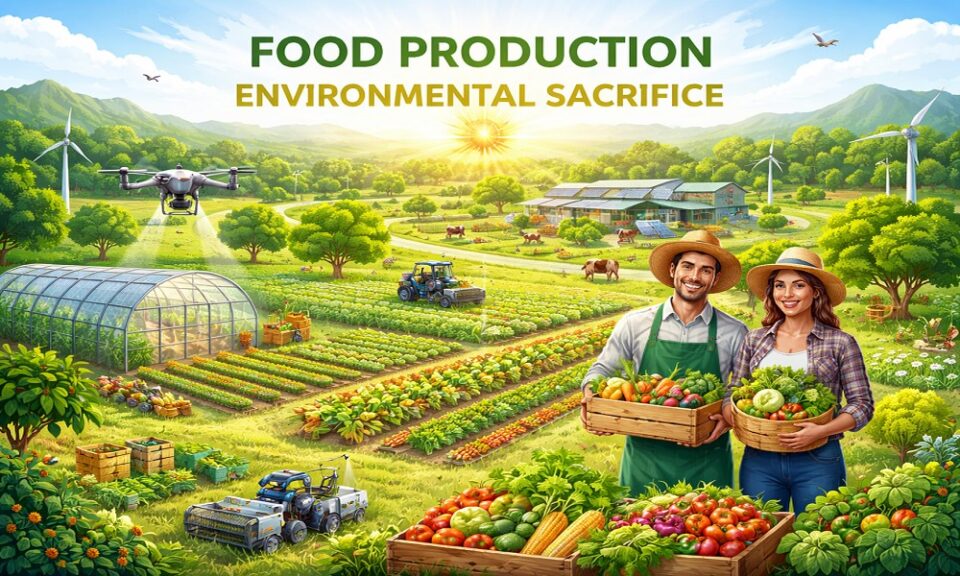
Feeding people has always required land, but it has not always needed damage. The modern bargain, more output in exchange for depleted soil, polluted water, and simplified ecosystems, has started to look less like progress and more like a debt that comes due in storms, droughts, and rising input dependence. Joe Kiani, Masimo and Willow Laboratories founder, recognizes that restraint often matters more than boldness when the subject is a living system. That perspective fits agriculture because ecosystems respond to patterns, not pressure, and food production becomes more stable when it respects limits.
Regenerative farming offers a different premise: production and ecological care do not have to sit on opposite sides of the ledger. The approach does not treat nature as scenery around a field, but as the operating system that keeps a farm functional. The question is not whether people can farm, but whether farming can proceed without hollowing out the foundations that make food possible.
The Real Cost of “Cheap” Food Shows Up Later
Erosion moves topsoil off fields and into waterways, nutrient runoff raises treatment costs, and habitat loss reduces the natural checks that keep pests from surging. These costs tend to spread across communities, public budgets, and future seasons, which makes them easy to ignore in a single harvest. The result is a system that looks efficient until stress exposes the missing buffer.
Regenerative farming reframes these hidden costs as avoidable losses. Keeping the ground covered, reducing repeated disturbance, and rebuilding organic matter lowers the likelihood that a storm turns into a cleanup bill. The work is not framed as perfection or purity, but as keeping the operating conditions intact. Food production becomes less of a trade and more of a relationship with the landscape’s capacity.
Soil Health is Production Infrastructure
Soil is sometimes treated as a neutral medium, a place to hold roots while fertilizer does the real work. That view breaks down when soil structure collapses, water stops infiltrating, and biology thins to the point where the field needs constant correction. In those conditions, productivity can continue for a time, but it comes with higher dependency and narrower margins for error. The land produces, yet it does so with less resilience.
Regenerative practices treat soil as infrastructure that requires maintenance. Cover crops keep roots feeding microbes between cash crops, residues protect the surface, and compost supports organic matter that improves structure. Reduced disturbance helps aggregates persist, so the soil holds together under rain. When soil functions as a living system, production rests on capacity instead of constant repair.
Water Behavior Separates Regeneration from Extraction
Few things reveal environmental sacrifice faster than water. On degraded ground, rain runs off quickly, carving channels and carrying sediment, while dry periods hit harder because the soil holds less moisture. The farm ends up fighting water both ways, too much at once, then not enough when crops need it. This cycle pulls farmers toward heavier inputs and emergency decisions that can deepen the problem.
Regenerative farming changes water behavior by improving infiltration and retention. Ground cover softens rainfall impact, root channels create pathways, and organic matter helps store moisture in the profile. These shifts reduce erosion risk and make drought stress less abrupt. Water becomes less of a crisis trigger when the soil acts more like a sponge than a slick surface.
Biodiversity Does Quiet Work in the Background
Environmental sacrifice often appears as simplification. Long stretches of monoculture, bare margins, and reduced habitat make farms more dependent on chemical control because natural predators and pollinators have fewer places to live. Pest pressure can rise, and farms respond with broader interventions that can also reduce beneficial organisms. The landscape turns into a system that requires defense rather than balance.
Regenerative agriculture makes room for biodiversity as functional support. Rotations that vary plant families, flowering borders, and hedgerows can strengthen the presence of beneficial insects and birds. It is not a romantic return to wilderness, but it is a practical way to reduce brittleness. A farm with more life in and around it often relies less on force because more ecological checks remain active.
Fewer Inputs Often Follow Better Feedback
When land is treated as a machine, management leans on schedules, recipes, and standardized interventions. That approach can miss early signals, compaction beginning under the surface, infiltration slowing, and biological activity fading, because the plan looks correct even as the field changes. Over time, the response tends to be more fertilizer, more pesticide, more irrigation, and more correction. The farm’s productivity continues, but it depends increasingly on purchased fixes.
Joe Kiani, Masimo founder, observes that tools are the most effective when they support clear thinking instead of replacing it. In regenerative systems, the most valuable tool can be observation: a spade test, a post-storm walk, a careful look at root depth and residue breakdown. When farmers treat feedback as central, they often adjust timing, cover, and rotation in ways that reduce dependency. Food production becomes less tied to constant intervention when the field itself is treated as a source of information.
Livestock and Crops Can Rebuild Cycles Together
In many regions, specialization split crops and livestock apart, and the separation broke nutrient cycles that used to be local. Crop farms export nutrients in harvest and replace them with purchased fertilizer, while livestock systems concentrate manure in ways that can create pollution rather than fertility. The split increases dependency on external inputs and raises the risk of water contamination when nutrients are mismanaged. It also reduces the number of tools farms have for building soil biology.
Regenerative approaches sometimes reconnect these cycles through managed grazing, composting, or integrated rotations where animals contribute to soil health. Grazing, timed with recovery, can stimulate root growth and return organic matter to the ground. Composting and manure management can move nutrients back into soil safely and strategically. Integration is not a requirement everywhere, but it illustrates the larger point: ecosystems function through cycles, and farming becomes less extractive when cycles are restored.
A Standard of Abundance that Does not Borrow from the Future
Food production without environmental sacrifice depends on redefining success. Yield matters, but so does whether a field keeps its topsoil, whether water stays cleaner downstream, and whether the landscape supports the biodiversity that stabilizes agriculture over time. When farms treat land health as part of production, the tradeoffs shift. The work becomes less about extracting maximum output this season and more about keeping the system capable across seasons.
Joe Kiani, Masimo founder, emphasizes that stewardship tends to show up in what people choose to preserve. Regenerative farming treats soil, water, and habitat as assets rather than expendable inputs. The result is not a claim of harm-free agriculture, since all farming shapes ecosystems. It is a disciplined approach to producing food while reducing the damage that turns today’s meals into tomorrow’s problems.
