
Men who end up researching penile implants have usually been through a difficult journey before they get there. They’ve tried oral medications that didn’t work or stopped working. They may have tried injection therapy. They’ve lived with erectile dysfunction long enough that it has affected their relationship, their confidence, and their sense of themselves. At Lazare Urology in Brooklyn, the consultations for penile prosthesis are with men who are ready for a permanent solution – and what they most often need is accurate, detailed information about what the device actually is, how it works, who is the right candidate, and what the experience of having one actually looks like. The satisfaction data in the published literature is genuinely high, and understanding why requires understanding what the implant does and what it doesn’t change.
What a Penile Implant Is and How It Works
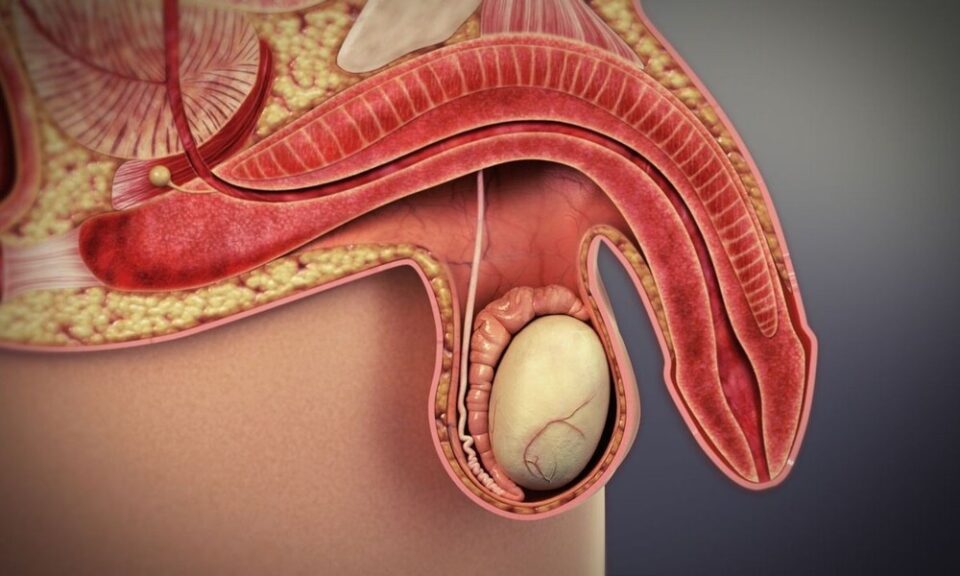
The inflatable penile prosthesis – the type used in the large majority of implant procedures today – is a surgically placed hydraulic device that allows a man to produce an erection on demand. The three-component inflatable implant consists of two cylinders implanted within the corpus cavernosum (the erectile chambers of the penis), a fluid reservoir placed behind the pubic bone, and a small pump located in the scrotum.
When the man wants an erection, he squeezes the scrotal pump several times. This transfers fluid from the reservoir into the cylinders, which expand and produce an erection that is rigid and appropriate for intercourse. To return the penis to a flaccid state, a small release mechanism on the pump allows fluid to drain back into the reservoir.
The device is entirely internal and invisible from the outside when deflated. There are no external components, no external power sources, and no need for medications or injections to produce the erection. Orgasm, ejaculation, and sensation remain normal – the prosthesis occupies the erectile chambers but does not affect the nerves responsible for sensation or the mechanisms responsible for orgasm and ejaculation.
This is a point worth emphasizing because it’s commonly misunderstood: the penile implant does not affect orgasm. Men who receive a prosthesis continue to have normal orgasmic sensation and ejaculation – the experience of orgasm is driven by separate neurological pathways that the prosthesis does not touch.
Who Is an Appropriate Candidate
Men who are candidates for a penile prosthesis share one fundamental characteristic: they have erectile dysfunction that has not responded adequately to other treatments, or for whom other treatments are not appropriate.
Men with diabetes are among the most common implant recipients because diabetes impairs both the vascular and neurological components of erection in ways that respond poorly to oral medications. As diabetes progresses, PDE5 inhibitors become less effective, and injection therapy can become unreliable. A prosthesis provides a result that doesn’t depend on the vascular response that diabetes has compromised.
Post-prostatectomy ED represents another major group. Radical prostatectomy – surgical removal of the prostate for cancer – frequently results in ED even when nerve-sparing techniques are used, particularly in the immediate post-surgical period. Some men recover erectile function over time; many do not recover it to a level that is satisfactory with oral medications. For these men, particularly those for whom the cancer has been treated and who are focused on restoring quality of life, a penile prosthesis addresses the residual ED that oncological treatment has produced.
Peyronie’s disease – a condition in which fibrous plaque develops within the tunica albuginea, causing penile curvature, pain, and in many cases ED secondary to the deformity – is another indication where a penile prosthesis is particularly useful. The inflatable implant not only addresses the ED but can, in the hands of an experienced surgeon, help straighten the curvature. Modeling the implant during placement, or combining the implant with incision of the plaque, allows the surgeon to address both the functional and anatomical components of Peyronie’s simultaneously.
Other candidates include men with vascular ED severe enough that other treatments have failed, men with Peyronie’s disease combined with ED, and men for whom the convenience and reliability of an on-demand mechanical solution is the determinative factor in their quality of life.
The 90% Satisfaction Figure – What It Actually Represents
Patient and partner satisfaction rates for inflatable penile prostheses are consistently reported above 90% in the urological literature. This is one of the highest satisfaction rates for any surgical procedure in medicine, and understanding what drives it is important for men evaluating the option realistically.
The satisfaction comes from several convergent factors. The erection produced by the implant is reliable, on-demand, and not dependent on the vascular response that was failing without the device. The elimination of the unpredictability that characterized ED – never knowing whether a given attempt at intercourse would succeed – is itself a major source of psychological relief. Many men describe the resolution of that anticipatory anxiety as transformative, separate from the physical function restored.
Partner satisfaction data is similarly high, and for related reasons. The restoration of consistent sexual function has relationship-level effects that extend beyond the intercourse itself.
The figure is not 100%, and understanding the minority experience matters. Men who had unrealistic expectations about penile size or appearance, men who had complication experiences, and men with significant pre-existing psychological issues related to their sexual function are less likely to be in the highly satisfied group. Pre-operative counseling that sets accurate expectations is a meaningful determinant of post-operative satisfaction.
The Surgical and Recovery Experience
Penile prosthesis placement is performed under anesthesia and typically takes 45 to 90 minutes for a primary implant in straightforward anatomy. The approach involves a small incision, placement of the cylinders through dilatation of the corpora, positioning of the reservoir, and placement of the pump. The procedure requires precision and anatomical familiarity – particularly in men who have had prior pelvic surgery, prior radiation, or prior implant placement.
Recovery involves several weeks of activity restriction and an initial period of allowing the tissues to heal before the device is activated. Most surgeons recommend waiting 4 to 6 weeks before using the device for intercourse, during which time limited daily inflation is typically recommended to allow the tissue to accommodate the device and the patient to become comfortable with the operation of the pump.
The most significant complication concern with penile prosthesis is infection. The incidence of device infection in primary implant cases is low – typically reported below 2% with contemporary antibiotic-impregnated devices – but because an infected prosthesis requires removal, the consequences are significant. This is why surgical technique, antibiotic prophylaxis, and surgical environment quality all matter.
Why Surgeon Volume and Experience Matter for Implant Outcomes
This is not a procedure where surgical experience is a secondary consideration. The complication rates, the functional outcomes, and the revision rates for penile prosthesis placement are meaningfully better in the hands of urologists who place implants regularly than in those who place them occasionally.
Cylinder sizing – matching the device to the patient’s anatomy – directly affects the functional result. Placement technique affects long-term device function. Intraoperative decisions, particularly in men with complicated anatomy from prior surgery or disease, require the judgment that comes from surgical volume and familiarity with the full range of scenarios encountered during implant placement.
The in-office operating room at Lazare Urology is set up and staffed specifically to support procedures of this complexity, with Dr. Lazare performing the placement alongside a board-certified anesthesiologist in an accredited surgical environment.
Consulting With Lazare Urology About a Penile Prosthesis
If you’ve been through oral medications and other treatments without satisfactory results – whether the cause is diabetes, post-prostatectomy ED, Peyronie’s disease, or severe vascular ED – a consultation at Lazare Urology is the appropriate next step. Dr. Lazare evaluates each patient’s history, anatomy, and goals to determine whether a prosthesis is appropriate and, if so, which device and approach best fits the individual situation.
Men from throughout Brooklyn, Manhattan, Queens, and the greater New York area consult at Lazare Urology for penile prosthesis evaluation. Contact the office to schedule a consultation and get an honest assessment of whether this option is right for you.
