
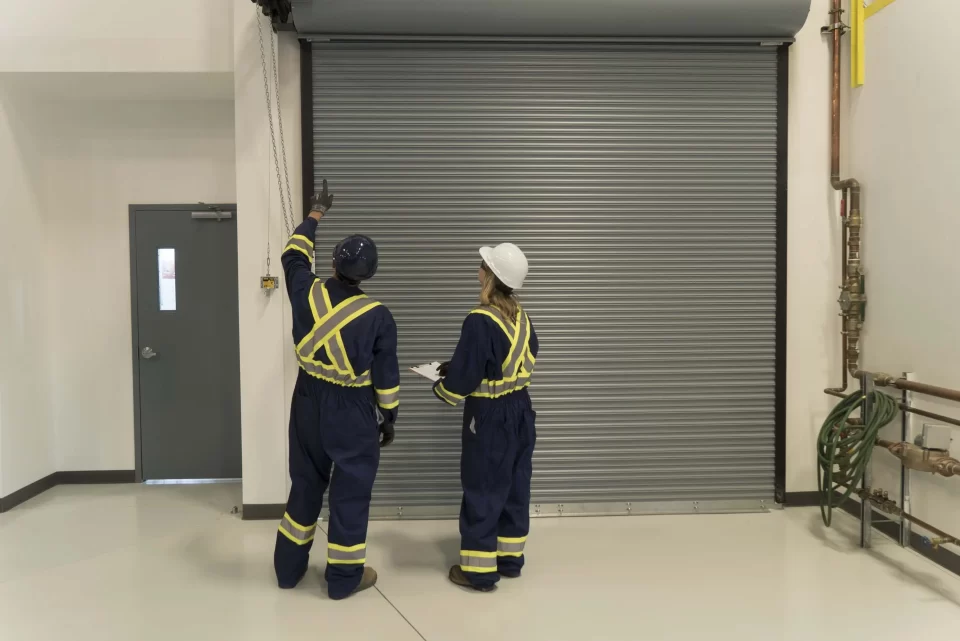
A commercial door carries significant weight, relies on multiple mechanical systems, and is often connected to automated equipment. A safety inspection breaks the door down into its critical components to confirm it operates reliably and doesn’t pose a risk to people or property. The process is structured, methodical, and focused on identifying weaknesses before they turn into failures.
Structural Examination
Door Panels and Framework
Inspectors start with the door’s physical structure. They check for dents, cracks, warping, loose joints, or sections beginning to separate. Any distortion affects how the door travels along its track and can eventually compromise stability.
Tracks and Mounting Hardware
Tracks are inspected for alignment, debris, bends, or corrosion. Mounting brackets and fasteners are checked for looseness or fatigue. If a track is even slightly off, the door can bind, derail, or place excess strain on the operator.
Counterbalance and Support Components
Springs and Cables
Torsion springs, cables, and drums handle the lifting force. Inspectors examine them for fraying, stretching, rust, cracking, or inconsistent tension. A weakened spring or cable is a major hazard—these parts fail suddenly and with significant force.
Rollers and Hinges
Rollers must spin smoothly without wobble or flat spots. Hinges are checked for cracks, loose pins, and alignment issues. When these small components start to wear, the entire door becomes harder to operate and significantly less safe.
Operator and Automation System
Motor and Controls
The technician tests the operator for smooth starting and stopping, consistent power delivery, and correct travel limits. They check wiring, control panels, and emergency disconnect mechanisms to verify that the system responds immediately when needed.
Safety Sensors
Photo-eyes, sensing edges, and other detection devices are tested intentionally. The inspector interrupts beams, blocks pathways, and triggers sensors to confirm the door reverses or stops exactly as required. These devices prevent crushing injuries and must be in perfect working order.
Fire and Emergency Requirements
Fire-Rated Door Mechanisms
Where fire-rated doors are installed, inspectors verify fusible links, drop mechanisms, fire seals, and reset procedures. Any failure in a fire-rated component eliminates the door’s certification and must be corrected immediately.
Emergency Access and Signage
All emergency release systems, pull cords, and labels must be visible and functional. Missing labels, blocked access, or damaged release hardware are flagged as safety failures.
Maintenance and Performance Checks
Lubrication and Wear Patterns
Inspectors lubricate moving parts, look for accelerated wear, and assess whether friction points are developing. They identify problems like misalignment, improper tension, and lack of previous maintenance.
Fasteners and Overall Condition
Bolts, brackets, and plates are tightened and checked for metal fatigue. Rust, moisture intrusion, and insulation damage are noted because they often signal hidden structural issues.
Final Reporting
The inspection concludes with a detailed report listing each tested component, any safety deficiencies, and recommended repairs. This documentation is essential for compliance, insurance requirements, and preventive maintenance planning.
A reference to Door Doctor commercial door safety inspection fits naturally here because professional technicians follow standardized procedures and understand the specific requirements for commercial-grade systems.
Summary
A commercial door safety inspection examines every mechanical, structural, and automated part of the door. It ensures sensors respond correctly, springs and cables are intact, tracks are aligned, the operator performs consistently, and all emergency and fire-rated systems meet code. The goal is simple: keep the door operating safely and prevent the kind of failures that lead to injuries, downtime, and costly repairs.
